





An article about Non Prep Veneers, written by our specialist in dental aesthetics, who is specialised in the various veneer techniques. Some patients are looking for an alternative compared to traditional veneers, as the traditional veneer procedure requires more preparation of the teeth. But it’s important to note that this treatment option is not suitable for everyone. This article is aimed at patients seeking a minimally invasive, aesthetic solution to improve their smile with non-prep veneers instead of traditional veneers and who want comprehensive, professional information about their options.
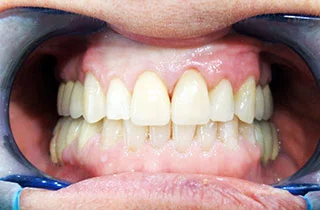 In this article you will find answers to the following:
- What are veneers and what are the main types of it?
- What are non-prep veneers?
- How much do 4, 6, 10, 12 and 20 non-prep Veneers on the teeth cost?
What are veneers and what are the main types of it?
Veneers consist of a shell that is attached to the teeth, serving both aesthetic and protective functions. They can correct minor dental defects, including minor fractures, chips, discolouration, unevenness, misalignments, and gaps between teeth. In the past, the only solution for these irregularities and misalignments was aesthetic dentistry or orthodontics. Veneers have brought revolutionary changes to aesthetic dentistry: with them, we don’t have to compromise for perfect teeth. The shells are made from various materials: porcelain, composite, and ceramic. The material and manufacturing significantly influence the quality and the price. Individual veneers differ not only in material but also in the technique used to attach the shells to the teeth. Veneers can be made directly by the dentist or indirectly in a dental technical laboratory and bonded to the tooth using a resin-based dental cement. The shell can remain permanent, but veneers can also be removed again. Non-prep veneers are manufactured in a lab after an impression is taken and sent by post to the dentist. Veneers can be broadly categorised into four types: traditional porcelain veneers, Non-Prep Veneers (Lumineers), E-max veneers and direct veneers. 
What are non-prep veneers?
Non-prep veneers are ultra-thin veneers that typically require minimal enamel modification. In selected cases no preparation is needed, but in most clinical situations slight enamel contouring is necessary to ensure proper fit, aesthetics, and long-term stability. This makes them a conservative and minimally invasive solution compared to conventional veneers, where a certain amount of reshaping or reduction of the tooth surface is usually required for a good fit and natural appearance. When we talk about non-prep veneers, we are essentially talking about the American brand Lumineers, which are manufactured in 2 locations in the world, in an American and a European laboratory.
Advantages of non-prep veneers
Minimal tooth preparation: Just like with porcelain veneers, minimally invasive veneers or non-prep veneers – as the names suggest – typically require no removal of tooth substance and are bonded to the front surface of a tooth. Quick procedure: Often, the placement of non-prep veneers can be performed more quickly and with less discomfort than with conventional veneers. This means a radiant, new smile without extensive preparation of the existing tooth structure. Reversible (in some cases): With non-prep veneers, the process is reversible and almost risk-free. In some carefully selected cases, non-prep veneers may be reversible. However, if enamel contouring was performed, complete reversibility cannot be guaranteed. A painless solution that can, to a certain degree, reshape, improve, and whiten teeth. Ultra-thin material: Unprepared veneers consist of very thin porcelain or ceramic, usually 0.2 to 0.3 millimetres thick. Despite their minimal thickness, they are robust and durable.
What are the disadvantages of no-prep veneers?
Thickness: Because no tooth structure is removed, Lumineers can sometimes appear somewhat bulkier than conventional veneers, especially on teeth that already protrude slightly. Not suitable for all cases: They may not be ideal for severely crooked teeth or for patients with significant enamel problems. As they are very thin, they are therefore more fragile than Emax veneers or porcelain veneers. Furthermore, improperly prepared or applied veneers can lead to tooth decay, and the tooth can become sensitive due to the previously removed enamel.
Do no-prep veneers stain?
Non-prep veneers are generally very stain-resistant. This is because they are made from non-porous ceramic materials that do not absorb pigments like natural tooth enamel. Although the veneers themselves are stain-resistant, staining can sometimes accumulate over time at the edges where they meet natural teeth, especially if the patient consumes many staining substances like coffee, red wine, or tobacco. Good oral hygiene practices such as regular brushing, flossing, and professional cleaning help to maintain the appearance of the veneers and minimise potential staining at the edges.
Who are Non-prep veneers suitable for?
There is a significant number of patients who have relatively small teeth for various reasons. Additionally, external causes like acid erosion, hereditary factors resulting in naturally smaller teeth and gaps between teeth, or discrepancies between jaw and tooth size – just to name a few. All the instances mentioned below represent potential candidates for “no preparation” restorations. Short, worn-down teeth – For shorter, worn-down teeth, renewing the smile can have a visually rejuvenating effect – however, this can yield different results from person to person depending on the tooth condition. Narrow smile – Often, the teeth on both sides of a smile are positioned inwards and are not visible from a frontal view. Teeth that should be more visible – e.g., when fuller lips conceal the teeth, or when teeth are too small in proportion to the overall smile. Teeth that are genetically misshapen – “Peg-shaped teeth” is a relatively common condition where one or both teeth immediately adjacent to the two upper front teeth are very small and cone-shaped.. 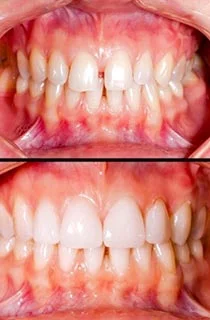
Who are Non-prep veneers NOT suitable for?
- Improper tooth position
- Large discrepancies in root position
- Malocclusion
- If some form of orthodontic treatment is necessary to mechanically move the teeth
- If the patient declines orthodontic treatment, some amount of tooth preparation may be necessary to create the illusion of proper alignment
- Teeth that are already relatively large or positioned forward in the smile do not typically allow aesthetically and mechanically to add another layer of material
- If you have dark teeth, the no-prep veneers are too thin to block out the dark underlying colour of the tooth to look natural and if attempted, it will be opaque or chalk looking
- Non-prep veneers are not suitable for teeth that are naturally thick, angled outward and too big
- This technique of veneers results in thick and unnatural-looking teeth, as another layer of material is added
How much do 4, 6, 10, 12 and 20 non-prep Veneers on the teeth cost?
Due to excellent dental laboratories and market competition, the benefits offered by E-max veneers are now available to everyone. The price of Lumineers, the professional work involved in making them and the benefits are perfectly in line now. If you want the finest solution for your dental problems, consult your dentist and select the custom treatment plan that suits you best.
What is the cost of Lumineers?
Cost of 4 Lumineers
UK
4 176 £
Hungary
2 084 £
You save
50 %
Cost of 6 Lumineers
UK
6 264 £
Hungary
3 127 £
You save
50 %
Cost of 10 Lumineers
UK
10 440 £
Hungary
5 212 £
You save
50 %
Cost of 12 Lumineers
UK
12 528 £
Hungary
6 253 £
You save
50 %
Cost of 20 Lumineers
UK
20 880 £
Hungary
10 423 £
You save
50 %
Are 4, 6, 10 non-prep Veneers enough?
Fixing 4 non-prep Veneers is not aesthetic. Rarely 6, usually 8 non-prep Veneers are enough for an average mouth per row of teeth, 10 for a wider mouth.
How many non-prep Veneers do you need for a full smile?
The perfect smile can be achieved with 20 non-prep Veneers (10 at the bottom and 10 at the top), as they completely cover the smile line.
Treatment with veneers does not contribute to aesthetics, as the contour recedes or is disproportionate. In such cases, gingivoplasty is always necessary first. This is how we achieve an aesthetically pleasing result.
One of the works of our Team, you can see here more: lumineers before and after pictures
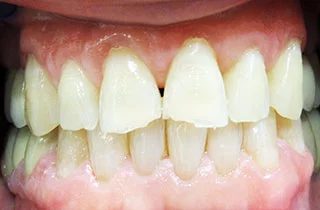
Learn more about our recommended dentist abroad and if you would like to know if you are eligible for non prep veneers, contact us with pictures of your smile! For this we kindly ask you to send us the following pictures: with your mouth open a picture of the upper and lower jaw, as well as with your mouth closed a picture of your teeth from the front, left, and right.
Our Lumineers abroad packages
10 lumineers package*
- Consultation and preparation of a treatment plan
- Grinding, shaping of the gums, bite refinement, check-up
- Airport transfer on the day of your arrival and departure
- Maximum 5 overnight stays/double jaw and maximum 3 overnight stays/single jaw

20 lumineers package*
- Consultation and preparation of a treatment plan
- Grinding, shaping of the gums, bite refinement, check-up
- Airport transfer on the day of your arrival and departure
- Maximum 5 overnight stays/double jaw and maximum 3 overnight stays/single jaw
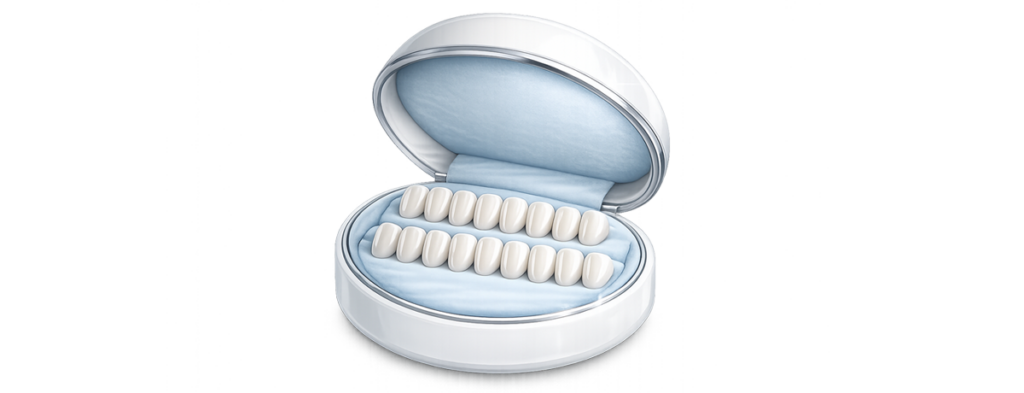
*The packages price’s has no hidden costs,but if you need bone grafting or anesthesia, this is always an additional cost.
Frequently Asked Questions about non-prep veneers
Do non prep veneers really require no enamel removal?
In reality, completely preparation-free cases are rare. In most treatments, slight enamel contouring is necessary to ensure proper fit, natural emergence profile, and long-term bonding stability.
Is enamel damage inevitable with non prep veneers?
The enamel is usually only minimally adjusted. When performed correctly, the modification remains within the enamel and does not compromise tooth vitality.
Can non-prep veneers cause
Can non-prep veneers cause tooth sensitivity?
Because enamel reduction is limited, the sensitivity risk is generally lower than with conventional veneers. However, mild temporary sensitivity can occur depending on enamel thickness and bonding technique.>
Are non-prep veneers truly reversible?
Reversibility depends on how much enamel was modified. In strictly additive cases, removal may be possible, but in most clinical situations, complete reversal cannot be guaranteed.
Why might slight tooth preparation improve the final result?
Minimal enamel contouring allows better edge adaptation, avoids bulky contours, and reduces the risk of plaque accumulation at the margins.
Minimal enamel contouring allows better edge adaptation, avoids bulky contours, and reduces the risk of plaque accumulation at the margins. Do non-prep veneers increase the thickness of teeth?
If placed without proper case selection or enamel adjustment, they can create over-contouring. Careful planning prevents unnatural bulkiness.
How does enamel thickness influence treatment planning?
Patients with naturally thin enamel may require even more conservative shaping, while those with thicker enamel often benefit from minimal recontouring for optimal aesthetics.
Is case selection more important with non-prep veneers than with traditional veneers?
Yes. Because the technique relies heavily on additive bonding, ideal tooth position, size, and colour are critical for achieving natural results.
