





According to many experts, zirconia replacement on 6-8 implants is the most premium and aesthetic restoration method for lost teeth when considering aesthetic aspects and comfort. This solution is widespread – and for good reason. It works. But, to be honest, It is not among the most affordable options. However, the All-on-4 system can be a real liberation for many people suffering from tooth loss. In just a short time, a complete dental arch can be restored – stable, secure, and with only four implants strategically placed in the right positions. This article is aimed at people who have lost multiple teeth and are looking for a permanent, aesthetic, yet cost-effective solution to restore their full dentition – especially those interested in the All-on-4 implant technique.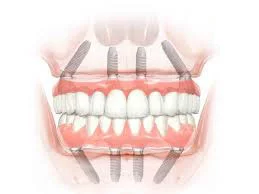
In this article, we answer most of the questions you may have about how the All-on-4 procedure works. The article answers the following questions:
- What is the All-on-4 technique?
- What are the advantages of All-on-4 implants?
- What is the downside of All-on-4 dental implants?
- Do All-on-4 feel like real teeth?
- What is the success rate of All-on-4?
What is the All-on-4 technique?
The All-on-4 technique is a modern dental implant solution that replaces an entire arch of missing teeth with just four strategically placed implants. This technique offers a durable, stable, and natural-looking alternative to conventional dentures, allowing patients to regain their full chewing function and a confident smile.
How does All-on-4 work?
Unlike conventional implants, which require one implant per tooth and in cases of severe dental bone loss a bone graft, the All-on-4 procedure places four titanium implants into the jawbone: two in the front and two angled at 45 degrees in the back for maximum support. The implants are then fitted with a custom-made full-arch prosthesis (fixed bridge) that is securely attached to the implants. The patient can receive a temporary prosthesis on the same day.
What are the advantages of the All-on-4 dental implant
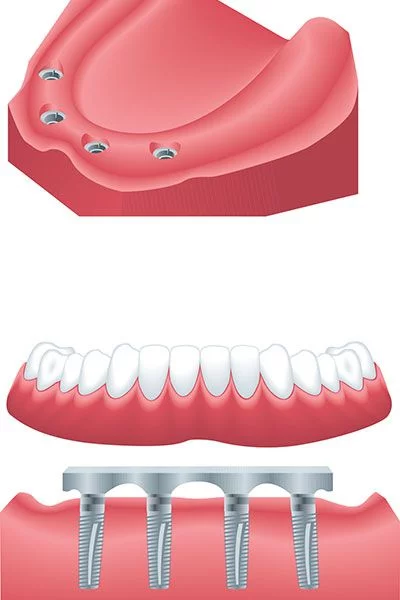 All-on-4 implants initially faced criticism, but the method has evolved over the years. Their advantages have been confirmed in many cases, although individual situations can vary.
- It can be successful despite a seemingly hopeless situation,
- With a shorter healing phase, the implants are, in most cases, immediately loadable
- Long durability,
- The All-on-4 system can be a more cost-effective alternative to longer treatments, for example, compared to conventional full dentures or complicated bone replacement procedures. At the same time, every case is unique, so other aspects must also be considered. removable dentures
- Teeth look more natural and feel better
- The All-on-4 system enables rapid tooth replacement; however, the advantages and risks of immediate results should always be weighe,d considering the individual’s health status. denture
What is the disadvantage of All-on-4 dental implants?
Although All-on-4 dental implants offer a permanent and effective solution for full-arch prostheses, there are some potential disadvantages you should consider before deciding on the procedure:
- Irreversible procedure: With the All-on-4 technique, your remaining natural teeth must be removed, even if they are still healthy. Once the implant is placed, the procedure cannot be reversed without additional surgery.
- Risk of implant failure: Although the success rate is high, implant failure can occur due to the following causes:
Poor bone integration (osseointegration). Smoking, diabetes or other conditions that impair healing. Poor oral hygiene leading to peri-implantitis (infection around the implant). Read about problems with dental implants - Potential bone loss over time: Since only four implants hold the entire dental arch, uneven pressure can be exerted on the jawbone, which can lead to bone loss in the areas without implants. Conventional implants distribute pressure more evenly across the entire jaw.
- Not suitable for all patients: Some patients with severe bone loss may still require additional procedures, such as a bone graft. Patients with uncontrolled diabetes, severe gum disease, or immune system disorders may not be good candidates.
- Adjustment to fixed dental prosthesis: Unlike natural teeth, All-on-4 feels different and may require an adjustment period. Some patients initially have difficulties with speech or eating certain foods.
- Cost considerations: Although All-on-4 is more affordable than single implants, it still represents a significant investment, costing between €5,000 and €15,000 per dental arch depending on materials and country.
Insurance coverage is often limited or unavailable. Read more about all-on-4 dental implants cost abroad - Maintenance and repair: Although implants are durable, the prosthesis bridge can wear out over time and may need replacement (typically every 10-15 years). Repairing chips, fractures, or wear can require additional costs and visits. dental implant repairs
Despite these disadvantages, All-on-4 remains one of the most effective options for the full restoration of chewing function. Choosing a qualified and experienced dentist is key to minimizing risks and ensuring long-term success.
Does All-on-4 feel like real teeth?
Yes. All-on-4 dental implants allow you to bite and chew like with natural teeth. The only difference is that All-on-4 prosthetic teeth are not as sensitive to pain as natural teeth. Since implants are placed in the jawbone, the pressure distribution can be somewhat different than with natural teeth. Therefore, it takes time to get used to chewing and speaking, especially in the first few weeks.
Is it difficult to speak with all 4 dental implants?
Initially, some patients experience slight difficulties speaking after the placement of All-on-4 dental implants, but most get used to it better and better within a few days to weeks. Because the artificial teeth and bridge feel different than natural teeth, your tongue and lips may need time to adjust to their new position when forming sounds.
What is the success rate of All-on-4?
“The All-on-4 implant technology shows a high success rate in scientific studies and is widely used for treating problems with complete dental arches. Likewise, it is advisable to examine other options to account for the individual circumstances of the patients.
How long does an All-on-4 dental prosthesis last?
The lifespan of an All-on-4 dental prosthesis depends on various factors, including:
- Oral hygiene: Regular brushing, flossing, using mouthwash, and regular professional dental cleanings are essential.
- Health of the jawbone: The implants must be firmly anchored in the jawbone. Sufficient bone density and quality are therefore important for the longevity of the prosthesis.
- General health: Systemic diseases such as diabetes or osteoporosis can affect the healing and maintenance of the implants.
- Habits: Smoking, teeth grinding, and consuming hard foods can shorten the lifespan of the prosthesis.
- Materials and quality of the prosthesis: High-quality materials and precise workmanship contribute to the longevity of the prosthesis.
- In general, All-on-4 implants can last 20 years or longer with good care and regular check-ups. Read more about how long dental implants last
What can affect the lifespan?
- Peri-implantitis: Inflammation of the tissue around the implants can lead to dental bone loss and loosening of the implants.
- Fracture or damage to the prosthesis: The prosthesis can be damaged by impacts, chewing on hard objects, or teeth grinding.
- Loosening of the implants: In rare cases, the implants can loosen or detach from the jawbone.
Regular check-ups with the dentist are important to detect and treat problems early. Read more about possible Problems with dental implants
All-on-4 Concept HFG
How does the All-on-4 concept differ from All-on-6?
With the All-on-4 concept, an entire dental arch is supported by four implants. All-on-6 uses a greater number of implants, which can provide additional stability in certain cases. The most suitable option depends mainly on the available bone volume, bite forces, and the preferred material of the bridge.
Is bone augmentation always necessary with the All-on-4 concept?
Not necessarily. Because the posterior implants are placed at an angle, All-on-4 can often be performed without extensive bone grafting. In some situations, such as severe bone resorption, additional augmentation may still be required.
How long does it take to adapt to a fixed All-on-4 bridge?
Most patients need a few weeks before speaking, chewing, and the overall sensation in the mouth feel completely natural again. At first, the restoration may feel “new”, but with time it usually becomes second nature.
Can an All-on-4 restoration be carried out in both the upper and lower jaw at the same time?
Yes, rehabilitation of both arches is possible, but it is always planned on an individual basis. Treatment is often performed in stages to optimise healing and functional load. An experienced clinician will determine the most appropriate medical and organisational approach.
What role does the dental laboratory play in the All-on-4 concept?
A very significant one. The precision of fit, aesthetics, and bite design depend greatly on the laboratory’s work. High-quality prosthetic results are achieved only when the implantologist and dental technician collaborate closely.
What happens if one of the four implants develops long-term complications?
In rare cases, an implant may fail. The clinician will then assess whether a replacement implant can be placed or whether the bridge needs adjustment. Careful planning and regular follow-ups significantly reduce this risk.
Are there any restrictions on sport or physical activity after All-on-4 treatment?
Immediately after the procedure, strenuous physical activity should be avoided for several days. Most patients can gradually return to everyday routines afterwards. Contact sports should be discussed with the dentist to ensure safety.
How can I recognise a reputable clinic abroad for the All-on-4 concept?
Look for transparent cost plans, written warranties, verifiable clinician qualifications, and genuine patient reviews. A trustworthy clinic takes time for consultation and provides a realistic explanation of what is achievable in your specific case.
In summary, it can be stated that All-on-4 implants can be durable solutions for tooth loss if well maintained. With the right oral hygiene, regular check-ups, and a healthy lifestyle, you can maximize the lifespan of your All-on-4 dental prosthesis.
